


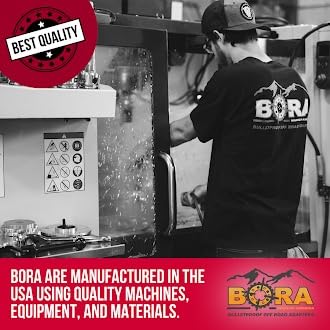

Bora Tacoma Wheel Spacers | Precision-Engineered Hub-Centric Fitment
Our Tacoma wheel spacers are CNC-machined from forged 6061-T6 billet aluminum to deliver factory-grade precision on every truck. Each spacer maintains the hub-centric fitment that eliminates wheel vibration and ensures even load distribution across your studs. We engineer these spacers specifically for 2005-2024 Tacoma platforms, matching OEM bore dimensions and stud patterns to the thousandth of an inch.
These spacers push your wheels outward to clear larger tires, level your stance after a lift, or fill the fender gap for a more aggressive look. Available in 1.25-inch and 1.5-inch thicknesses, they install between your hub and wheel using extended studs we include in every kit. The anodized finish resists corrosion in mud, salt, and trail conditions that corrode lesser spacers within a season.
Engineering specs & fitment details
Hub-centric engineering & why it matters
Hub-centric fitment means the spacer’s center bore matches your Tacoma’s hub diameter exactly — 106.1mm — so the hub bears the vehicle’s weight instead of forcing your wheel studs to carry the load. Lug-centric spacers rely on stud tension alone, which creates micro-movement under braking and cornering that wears studs prematurely and telegraphs vibration through your steering wheel.
We machine every center bore to within 0.001-inch tolerance so the spacer slides onto your hub with zero play. The wheel then centers on the spacer’s outer hub, maintaining the same load path Toyota engineers designed into the original assembly. This is the same construction method used in our Tundra wheel spacers, where half-ton payload demands leave no room for tolerance stacking or fitment shortcuts.
Thickness selection for your build
The 1.25-inch spacer adds roughly 2.5 inches of total track width and works for most leveling kits or mild tire upgrades. If you’re running a 2-3 inch suspension lift with 33-inch tires, this thickness typically brings the tread face flush with your fender flare without rubbing during full lock turns.
1.5-Inch spacers for aggressive fitment
The 1.5-inch option pushes wheels outward an additional quarter-inch per side, which is often necessary when you’re clearing 34-inch or larger mud-terrains on a 3-inch-plus lift. This thickness also compensates for wheels with higher positive offset — if you’re reusing stock Tacoma wheels or aftermarket wheels designed for a different platform, the extra spacing prevents tire sidewall contact with upper control arms during compression.
Installation & torque specifications
Each kit includes extended wheel studs that replace your factory studs — you’ll press out the originals and install the longer versions we provide using a hydraulic press or heavy hammer and socket. Once the new studs are seated, the spacer slides onto the hub and you torque the included lug nuts to 85 ft-lbs in a star pattern.
Your wheel then mounts to the spacer’s outer face using your factory lug nuts, torqued to the same 85 ft-lbs spec. We recommend re-torquing after the first 50 miles and again after 500 miles as the aluminum settles into the hub face and stud threads fully seat. After the break-in period, check torque every time you rotate tires.
Complete your Tacoma build with these precision spacers


Rated 4.8 by verified buyers
Common questions about Bora Tacoma wheel spacers
Yes, our spacers work with factory Tacoma wheels and tires as long as your vehicle uses the 6×5.5-inch bolt pattern found on 2005-2024 models. The hub-centric design matches the OEM 106.1mm center bore so you maintain factory fitment precision.
If you're keeping stock wheel diameter and tire size, spacers are typically used to level your stance after installing a front leveling kit or to achieve a more aggressive appearance by pushing the wheels closer to the fender edge. You won't gain tire clearance for larger sizes unless you're also addressing suspension lift.
No, every Bora Tacoma wheel spacer kit includes extended wheel studs and all necessary installation hardware. The studs we provide are longer than your factory studs to account for the spacer thickness while maintaining full thread engagement through your wheel.
You'll remove your original studs and press in the extended versions we supply before installing the spacers. This ensures proper clamping force and meets the minimum thread engagement Toyota specifies for safe wheel retention.
Hub-centric spacers like ours use a precision-machined center bore that slides onto your hub and centers the spacer using the hub's outer diameter. Your vehicle's weight transfers through the hub into the spacer and then into the wheel — the same load path as your factory assembly.
Lug-centric spacers have an oversized center bore and rely entirely on lug nut tension to center and support the wheel. This concentrates stress on the studs and allows micro-movement that causes vibration and accelerates stud wear. Hub-centric fitment eliminates both issues by keeping the hub as the primary load-bearing surface.
Yes, spacers are commonly used to correct offset mismatches when you install aftermarket wheels designed for a different vehicle or intended use. If your new wheels have too much positive offset and your tires contact suspension components, adding spacers pushes the wheel outward to restore clearance.
Verify that your aftermarket wheels use a conical lug seat that matches Toyota's 60-degree taper. Some wheels use a ball seat or flat washer design that requires different lug nuts — mixing seat styles will crack your wheels over time.
Re-torque the lug nuts that secure the spacer to your hub after the first 50 miles, then again after 500 miles. This accounts for the initial settling of the aluminum against the hub face and the full seating of the stud threads.
After the break-in period, check torque every time you rotate tires or any time you remove a wheel for brake service or other maintenance. We recommend an annual inspection of the hub-to-spacer contact surface to verify there's no fretting or discoloration indicating movement.
Wheel spacers themselves do not void your entire vehicle warranty, but Toyota may deny coverage for specific suspension or wheel-bearing failures if they determine the spacers contributed to the damage. The Magnuson-Moss Warranty Act requires manufacturers to prove that an aftermarket part caused the failure before denying a claim.
Our hub-centric design maintains factory load distribution, which minimizes additional stress on bearings and suspension components. Proper installation and regular torque checks further reduce any risk of spacer-related issues.
Most Tacomas with a 2-3 inch leveling kit and 33-inch tires work well with our 1.25-inch spacers. This typically brings the tire face flush with the fender without rubbing during full steering lock or suspension compression.
If you're running a wheel with high positive offset or a particularly wide 33-inch tire, you may need the 1.5-inch spacers for adequate clearance. Measure the distance between your current tire sidewall and the upper control arm at full lock — if it's less than half an inch, step up to the thicker spacer.