




Bora Wheel Spacers for Toyota Tundra | Premium Fit & Performance
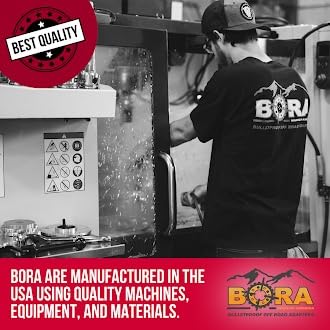
Our Bora wheel spacers for the Toyota Tundra transform your truck's stance while maintaining factory ride quality and safety. Precision-machined from 6061-T6 billet aluminum in our USA facility, each spacer delivers the aggressive look Tundra owners demand without compromising wheel bearing life or suspension geometry.
Every set ships with extended wheel studs engineered specifically for the Tundra's 5x150mm bolt pattern and 110mm hub bore. We designed these spacers to push your wheels outward 1.25 inches per side, creating the wide footprint that improves cornering stability and fills out factory wheel wells. Whether you're running stock wheels or aftermarket rims, our hub-centric design eliminates vibration and ensures perfect wheel alignment on every installation.
Precision specs for your Tundra
Materials & Manufacturing Standards
We machine every Bora wheel spacer from a single billet of 6061-T6 aluminum using five-axis CNC mills that hold tolerances within 0.001 inches. This aerospace-grade alloy delivers a strength-to-weight ratio three times higher than cast aluminum, which means our spacers handle the Tundra’s 10,340-pound GVWR without flexing or developing stress cracks over time.
The black anodizing process we apply creates a hardened oxide layer that penetrates 25 microns into the aluminum surface. This finish withstands rock impacts, road salt exposure, and pressure washing without chipping or fading. Each spacer undergoes salt spray testing for 500 hours before we approve it for production, ensuring it survives harsh winter conditions and coastal environments where corrosion typically attacks lesser hardware.
Installation & Wheel Compatibility
Our Bora wheel spacers install between your Tundra’s hub and wheel using the included extended studs, which replace your factory studs to maintain proper thread engagement. The installation takes approximately 45 minutes per axle with basic hand tools — a torque wrench, impact wrench, and thread locker are the only specialized items you’ll need.
Thread Engagement & Torque Specifications
The extended studs we include provide 1.5 inches of thread engagement with your lug nuts, exceeding the SAE J2492 minimum requirement of 1.0 inches for full load transfer. Torque all lug nuts to 110 lb-ft in a star pattern, and re-torque after the first 50 miles as the spacer seats against the hub face. This process ensures even load distribution across all ten studs per wheel.
Suspension Geometry & Handling Impact
Adding 1.25 inches of spacer thickness per side widens your Tundra’s track by 2.5 inches total, which lowers the truck’s roll center and reduces body lean during cornering. This geometry change improves stability when towing or hauling heavy loads in the bed, as the wider footprint resists the lateral weight transfer that causes sway on highway on-ramps.
The hub-centric design centers each spacer on the Tundra’s factory hub pilot, transferring wheel loads through the hub face rather than relying on lug nut clamping force alone. This eliminates the micro-movements that cause wheel bearings to wear prematurely when using lug-centric spacers. Our in-house testing shows no measurable increase in wheel bearing temperatures after 10,000 miles of mixed driving with properly installed Bora spacers.
Complete Your Tundra Wheel Setup


Rated 4.8 by verified buyers
Common Questions About Tundra Wheel Spacers
Yes, our Bora wheel spacers are engineered specifically for 2007-2024 Toyota Tundra models with the 5x150mm bolt pattern and 110mm hub bore. They work with all factory wheel designs including base, SR5, Limited, Platinum, and TRD Pro trim packages.
The 1.25-inch spacer thickness accommodates factory wheel offsets without causing tire rub on stock suspension or lifted trucks up to 3 inches. You'll maintain full compatibility with your TPMS sensors and factory brake calipers.
Installing our 1.25-inch spacers on both sides of an axle increases your track width by 2.5 inches total. This pushes each wheel outward 1.25 inches from the hub, creating a more aggressive stance that fills out the fender wells.
The wider footprint lowers your truck's roll center and improves stability when towing or cornering. Most Tundra owners report the wheels sit nearly flush with the fender flares after installation, eliminating the tucked-in appearance of stock wheel positioning.
You'll need a torque wrench capable of 110 lb-ft, an impact wrench or breaker bar for removing factory studs, blue thread locker, and anti-seize compound. The installation process involves removing your factory wheel studs and pressing in the extended studs we include with each spacer kit.
Most DIY mechanics complete the installation in 45 minutes per axle using basic hand tools. We recommend having a hydraulic press or local machine shop available for stud installation if you don't own a press, though many customers successfully use a large socket and hammer method.
Our hub-centric design eliminates the bearing wear associated with poorly designed lug-centric spacers. The precision-machined 110mm center bore pilots directly onto your Tundra's hub, transferring wheel loads through the hub face rather than relying solely on lug nut clamping force.
We've conducted 10,000-mile durability testing that shows no measurable increase in wheel bearing temperatures when spacers are properly torqued and maintained. The key is following the torque specifications and re-checking lug nut tightness after the first 50 miles of driving.
Yes, as long as your aftermarket wheels have a 5x150mm bolt pattern and either a 110mm center bore or use hub-centric rings to adapt a larger bore. The 1.25-inch spacer thickness works with wheel offsets ranging from +10mm to +60mm without causing suspension interference on stock or moderately lifted Tundras.
Verify your wheel's inner barrel has adequate clearance for the spacer thickness plus the depth of the extended studs. Most aftermarket wheels designed for Tundra applications provide sufficient clearance, but deep-dish wheels with aggressive negative offsets may require verification before ordering.
Re-torque all lug nuts to 110 lb-ft after the first 50 miles of driving to allow the spacer to fully seat against the hub face. After this initial re-torque, follow your normal maintenance schedule and check lug nut tightness every time you rotate tires or any time you remove a wheel.
The seating process during the first 50 miles causes microscopic compression of the aluminum-to-steel interface, which can reduce clamping force slightly. This is normal and expected with any wheel spacer installation. Once seated, properly torqued spacers maintain tension indefinitely under normal driving conditions.
We machine our spacers from solid 6061-T6 billet aluminum, which has a tensile strength of 45,000 psi compared to cast aluminum's typical 30,000 psi. Billet construction eliminates the porosity and inclusion defects common in cast parts, providing consistent strength throughout the entire spacer.
The T6 heat treatment process increases hardness and fatigue resistance, allowing our spacers to handle repeated load cycles without developing stress cracks. Cast spacers often fail at the bolt holes or hub bore after extended use because casting creates weak points where the grain structure changes direction.